
Move from sole trader to a limited company when it fits
Sole trader to limited company moves make sense when your sales, tax position and workload have outgrown the old setup. We check before anything changes.
One Abacus was recommended to me by several friends and I truly owe them a huge favour as this company has been exemplary! As a new limited…Molly Eve Stevens · Read the reviews
Get a free quote
A few quick questions, then a plain recommendation and a fixed monthly fee in writing. About two minutes. No monthly tie in.
- Sales have outgrown the setup
- VAT is getting closer
A company can suit a growing creative, but it brings payroll, corporation tax and new filing dates. The real question is whether those duties improve your position enough to justify the move.
One Abacus is a two-person Brixton practice that helps growing creatives decide whether incorporation suits them, then handles formation, software and filings. Work is covered by one fixed monthly fee agreed in writing, and the accountant doing it answers the phone.
- Rated 5.0 on Google
- One fixed monthly fee, agreed in writing
- FreeAgent or Xero included
- Brixton, by appointment
What the right structure changes for you
Keep the setup that fits
You stay self employed if a company adds duties without enough benefit.
Give company money a proper home
If you switch, new invoices, costs and payments belong in the company.
Move every new deadline off your desk
Payroll, annual accounts, corporation tax and your director’s return are handled for you.
The moments that make incorporation worth checking
Growth can make an old setup awkward long before it makes the right answer obvious.
- Incorporate
“The commissions are regular now, but I cannot tell whether staying self employed still fits.”
Waiting can leave the decision until a client, deadline or tax bill forces it.
- VAT
“One large project pushed sales up, and I do not know whether VAT changes the decision.”
VAT can affect prices and paperwork, so it needs checking before the change date.
- Tax bill
“My self assessment bill landed at once, and I had no plan for the next one.”
A company brings different taxes and dates. Those need planning before you move.
- Sorted
What changes once the right advice reaches the decision?
You know whether to stay self employed or incorporate. If you switch, each registration and deadline has an owner. You can focus on commissions without guessing what the next sale changes.
Quick check · no email
If you cannot say whether incorporation fits, what tax is due before it lands, and who handles each new filing, it is worth a conversation
Answer these three questions against the way your work is set up this week.
Question 1 of 3
Do you know why a company would suit your work better than staying self employed?
Do you know what you could take from the company and how it would be taxed?
Do you know who would handle payroll, corporation tax and Companies House filings?
There are important parts of the decision still open. A conversation with Ryan can establish whether changing structure would help.
You have part of the decision covered. The painter’s move below shows why the remaining gap deserves checking before you incorporate.
All three answers are covered, so your decision has a sound basis. Read the guide before changing anything.
When staying self employed still makes more sense
The better structure is the one that earns its extra paperwork through a real benefit for your work.
Stay self employed for now
The work is still occasional or uncertain.
Your current setup remains manageable alongside the creative work.
You value fewer company filings more than the possible benefits.
After reviewing both routes, incorporation gives you no useful advantage.
A company may fit now
Commissions are regular enough to plan beyond the next project.
Clients expect invoices from a company.
Studio income needs separating from personal spending.
After checking tax and duties, the added filings earn their place.
What to check before choosing a company
A yes is useful only when it matches the way you actually work.
- 01
Are commissions regular enough to plan ahead?
Regular work can make the extra company duties worthwhile.
- 02
Do clients expect invoices from a company?
That can make incorporation a practical business decision.
- 03
Is studio income kept apart from personal spending?
Company money must be treated separately from your own.
- 04
Have you checked VAT before setting a change date?
Registration can affect your prices and the timing of the move.
- 05
Do you know how you would pay yourself?
Salary and other payments need a plan before money moves.
- 06
Can you manage the new filing dates?
A company brings Companies House and corporation tax duties.
- 07
Is your software ready for the company?
The company needs its own invoices, costs and bank feed.
- 08
Have you compared both routes for your circumstances?
Some growing creatives still have good reasons to remain self employed.
What we take over after the decision
If a company fits, we move the setup and its deadlines off your desk.
A company ready to use
We handle formation and the registrations your circumstances require.
The routine kept under control
FreeAgent or Xero, payroll and VAT are handled through the year.
Every annual filing handled
We prepare the accounts, corporation tax return, confirmation statement and your own return.
Entry 01
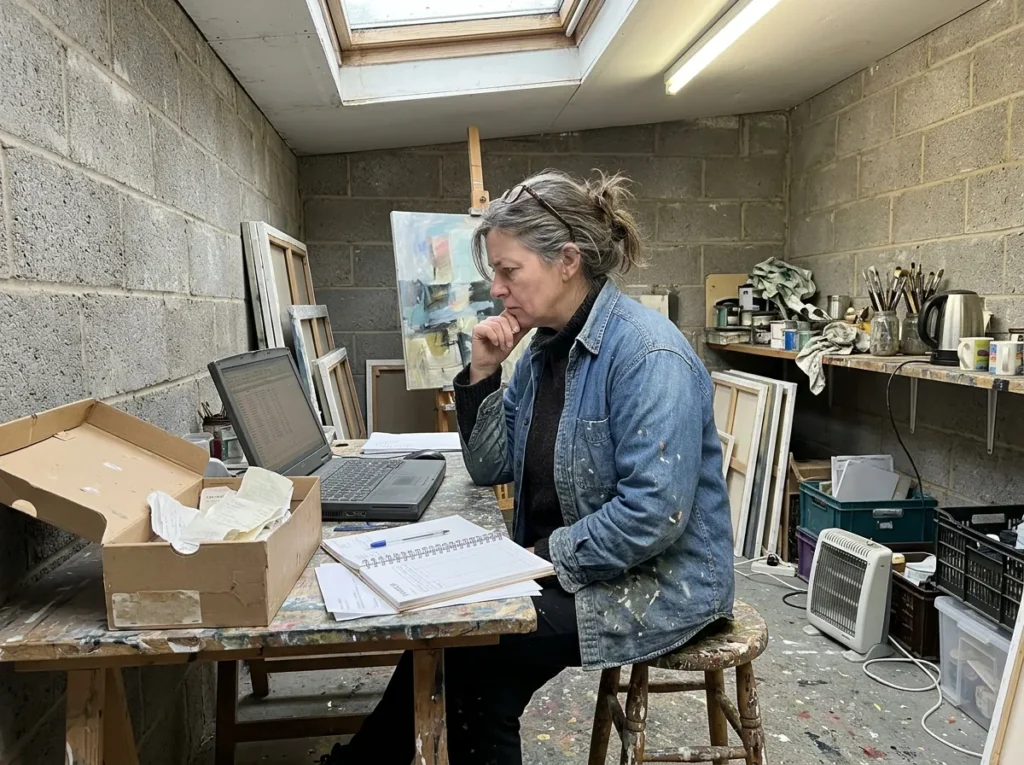
What happened when the paintings kept selling
Her work had grown into a business before the paperwork had caught up.
Clients described by type. Names withheld.
What clients say
One Abacus was recommended to me by several friends and I truly owe them a huge favour as this company has been exemplary! As a new limited company myself and a novice to the contracting world I have had tons of questions and they have been dealt with promptly, effectively and in an approachable and really helpful manner. I couldn't recommend One Abacus enough!
I am currently using one Abacus for sorting out all my freelance accounts and i have to say everything has been perfect with my accountant. they are normally always available even on the weekends when you need something sorted out really quickly. they have sorting out everything from helping with mortgage and notifying when you to pay your tax. really nice and responsive people to talk to if you have questions.
One Abacus has provided me a comprehensive service, very professional accountant, but friendly at the same time, maximum availability, I couldn't be happier.
How the move works without losing the thread
The change date matters because invoices, costs and tax duties need to move in the right order.
A decision based on your work
We compare both structures against your sales, plans and how you take money.
A clean change date
New invoices and costs move into the company from an agreed date.
The company ready for daily use
Registrations, FreeAgent or Xero and the bank feed are set up and explained.
Every new deadline has an owner
We handle payroll, VAT where needed, annual accounts, corporation tax and your director’s return.
When another route may fit better
Staying self employed may suit occasional work with uncertain future sales.
We do not take on charities, CICs, construction or CIS-led work.
Standalone bookkeeping or signing off work we did not prepare is outside our service.
Owners looking for daily personal admin will need a different kind of support.
If your creative work is service based and growing, the quiz will show whether a conversation makes sense.
Questions creatives ask before incorporating
What does your monthly fee include after I incorporate?
The monthly package includes FreeAgent or Xero, unlimited advice, payroll, VAT returns, year-end accounts, the corporation tax return, confirmation statement and the director’s self assessment. The price is fixed in writing before work starts and does not change mid-year. We first confirm which parts apply to your company.
Can you help me decide if I already have an accountant?
Yes. Having an accountant does not stop you asking us to look at whether incorporation suits your next stage. We can explain what would change, what remains with the sole trade and what the company would need. If you decide to move, the handover is arranged with your permission.
Do I have to move accounting software when I incorporate?
You do not always have to move software. We first look at how your books are kept and what needs to come across. Our ongoing package includes FreeAgent or Xero, configured for the company with the bank feed linked. We show you where invoices, costs and supporting paperwork belong.
What happens with my current accountant if I switch?
With your permission, we contact your current accountant for the information needed to continue the work. We agree the change date, pick up the next deadlines and set up any new registrations. There is no need to wait for your year end, although the timing should be planned before anything moves.
Sole trader to limited company: when is the move worth considering?
It is worth checking when commissions have become regular, the work is growing or you need a company behind your invoices. The answer depends on tax, admin, plans and how you take money. Some creatives are better staying self employed, so we compare both routes before recommending a change.
Sole trader to limited company: what changes when I switch?
A company is a separate legal entity. New invoices and costs belong to it from the agreed date, and it has its own accounts, corporation tax return and Companies House filings. Payroll may apply when you take a salary. Your final sole trader period still needs to be completed through self assessment.
Three ways to decide what happens next
Check whether the move fits
Answer a few quick questions, get a personalised recommendation, and if there is a fit Ryan will take you through the free review.
Get a free quote 02 · A question firstAsk Ryan about your position
Send your question and tell us what has changed in the business.
Ask Ryan a question 03 · Still decidingRead before choosing a structure
The guides explain the duties, trade-offs and decisions to check before incorporating.
Read the guides →